Hanford restarts certifying transuranic waste for shipment to New Mexico
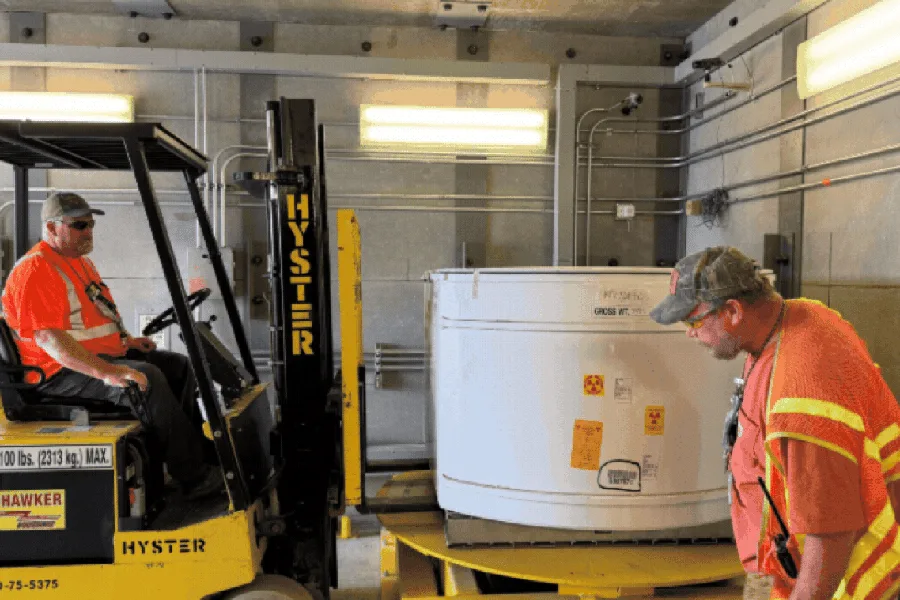
Hanford Site contractor Central Plateau Cleanup Company has resumed characterization of transuranic waste, which will be packaged for shipment to the Waste Isolation Pilot Plant in New Mexico.
Courtesy U.S. Department of EnergyHanford has restarted certifying transuranic waste for shipment to New Mexico.
The Hanford site paused its transuranic waste program in 2011 due to other cleanup priorities, then picked it back up in 2018.
The U.S. Department of Energy and Hanford contractor Central Plateau Cleanup Company are on track to resume shipping contact-handled transuranic waste to the Waste Isolation Pilot Plant, or WIPP, near Carlsbad, New Mexico, by Sept. 30, 2028.
“The certification process is critical to safely and compliantly packaging and shipping transuranic waste to WIPP for permanent disposal,” said Scott Green, DOE Office of Environmental Management Hanford Field Office acting assistant manager for River and Plateau, in a statement. “The process streamlines our effort to reduce Hanford’s transuranic waste inventory, ensures safe operations at Hanford and WIPP and helps us achieve our ultimate goal of protecting our community and the environment.”
Transuranic waste is a byproduct of Hanford’s plutonium production days, consisting of clothing, tools, rags, residues, debris, soil and other items contaminated with small amounts of plutonium and other human-made radioactive elements.
Hanford’s transuranic waste is stored above ground at the Central Waste Complex, which houses about 11,000 containers. Most of the contact- and remote-handled waste is stored in WIPP-compliant standard waste boxes or 55-gallon drums.
The WIPP-approved transuranic waste certification project involves characterizing each waste container and ensuring the containers meet transportation requirements as well as WIPP’s waste acceptance criteria.